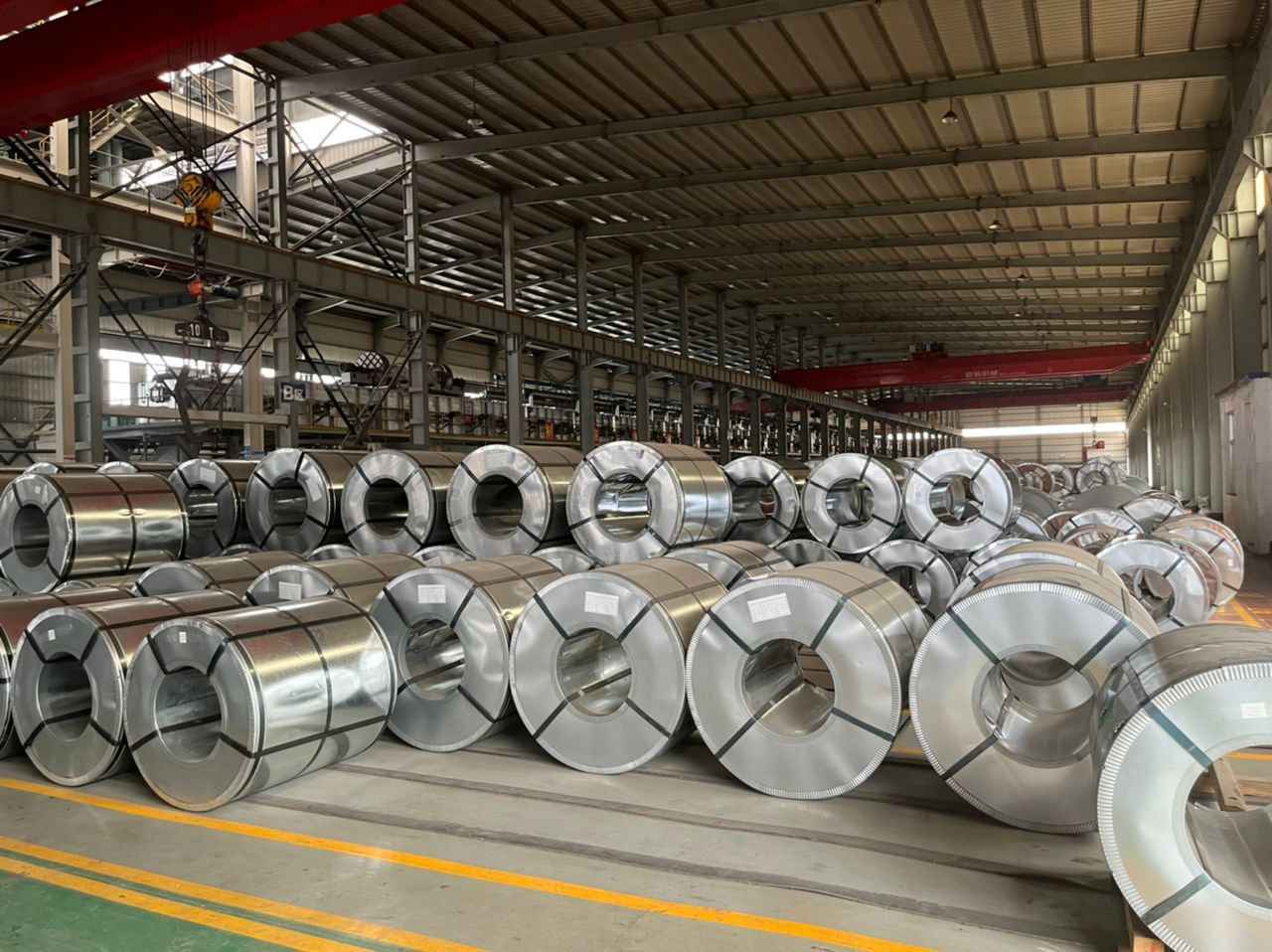
Core characteristics and advantages
The wide application of stainless steel coils stems from its unique physical and chemical properties:
Corrosion resistance: Chromium elements form a chromium oxide passivation film on the surface, which can resist acid, alkali and salt spray corrosion, and its service life can reach 5-10 times that of ordinary carbon steel.
High strength and lightweight: After cold rolling, the tensile strength can reach more than 2000MPa, and the thickness can be as thin as 0.02mm (equivalent to 1/4 of a hair), realizing a lightweight design of "thin instead of thick".
High temperature/low temperature resistance: Austenitic stainless steel has stable performance in an environment of -196℃ to 800℃, covering extreme working conditions.
Environmentally friendly and recyclable: 100% recyclable, the proportion of scrap steel added in modern processes exceeds 90%, and carbon emissions are reduced by 60% compared with traditional steelmaking.
Surface diversity: Through polishing, brushing, titanium plating and other treatments, it can present different textures such as 2B (matte), BA (mirror), HL (hairline), etc., to meet the aesthetic needs of architectural decoration.
Manufacturing process and technology evolution
Modern stainless steel coil production integrates cutting-edge technology and green technology. The main processes include:
Smelting:
Traditional process: Electric arc furnace (EAF) + argon oxygen decarburization (AOD) refining, precise control of carbon and sulfur content.
Innovation direction: Hydrogen direct reduction iron (HyDRI) technology gradually replaces coke steelmaking to achieve zero carbon emissions.
Hot rolling:
After heating the steel billet to 1200℃, it is rolled into 3-6mm thick plate coils. The AI dynamic temperature control system is used to reduce energy consumption by 15%.
Cold rolling:
The hot rolled coil is thinned to the target thickness at room temperature. The nano-coated roller technology enables ultra-thin rolling accuracy to reach ±0.001mm.
Annealing and surface treatment:
Bright annealing furnace (BA) eliminates internal stress, laser cleaning technology replaces pickling, and reduces wastewater discharge by 90%.
Technology trend:
Intelligent: Digital twin factory realizes real-time optimization of the entire process, and the yield rate is increased to 99.5%.
Low carbonization: By 2030, 30% of global production capacity will shift to hydrogen steelmaking, reducing carbon footprint by 80%.
Functionalization: Special materials such as self-healing coatings and conductive stainless steel open up new tracks.
Trade pattern: The EU carbon tariff (CBAM) forces companies to upgrade their processes, and the export premium of high-end stainless steel coils from China with zero-carbon certification reaches 15%-20%.
Related Posts
Online Message
Please give us a message